The Vijayanagara Empire is a great example of cross-cultural exchange through art and architecture. Exchange shaped Southeast Asia’s visual culture. This empire was rooted in South India, specifically Hindu. Their artistic identity formed constant interaction with Islamic sultanates and Indian Ocean trade networks.
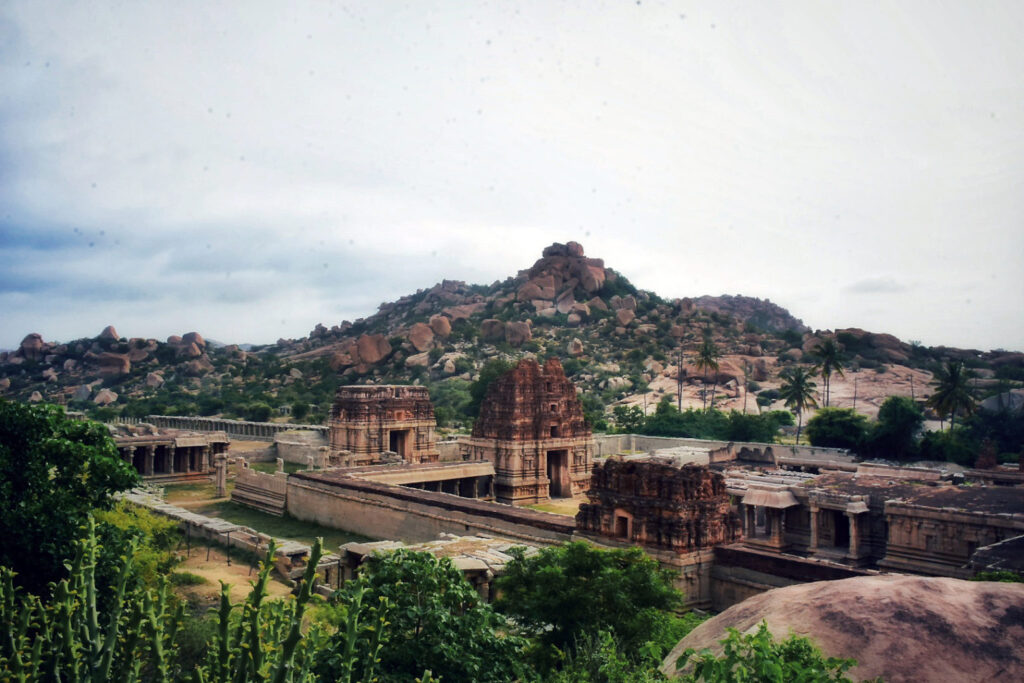
Specifically looking at the Ruins of Vijayanagara at Hampi, we see the scale of the imperial capital. This helps us see the setting of the empire’s cross-cultural developments.
Taking a look at Smarthistory, they explain Vijayanagara artist as “absorbed and adapted diverse artistic traditions.” Why this is important is due to showing the empire was never isolated through the visual language. It is also noted that they “borrowed from earlier Hindu traditions while incorporating new forms introduced through contact with the Sultanates.” It is pretty clear that the Vijayanagara art is a system shaped from heritage with in and influence from out.
The Achyutaraya Temple is where Hindu and Islamic architecture elements blend. It reflects the empires contact with the Bahmani and Deccan Sultanates.
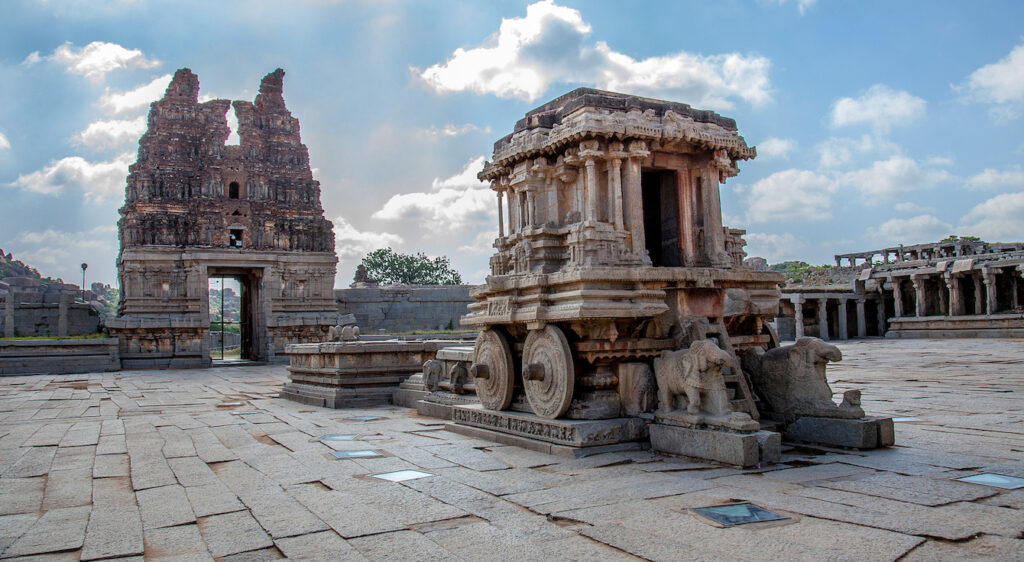
Exchange is complex for any empire, not just the Vijayanagara empire. They specifically had frequent clashes with the Bahmani Sultanate and the Deccan Sultanates later on. In turn, this created an environment where warfare, diplomacy, culture, and politic borrowing happened at the same time. The Islamic courts introduced new elements architecturally through arches, domes, and ornamentation. This blended into the Hindu temple complexes. Near their Ocean trade network, it connected them to kingdoms such as Majapahit. Through those routes, the Vijayanagara absorbed tower forms with aesthetic and decorative motifs. This enriched the architectural advancements.
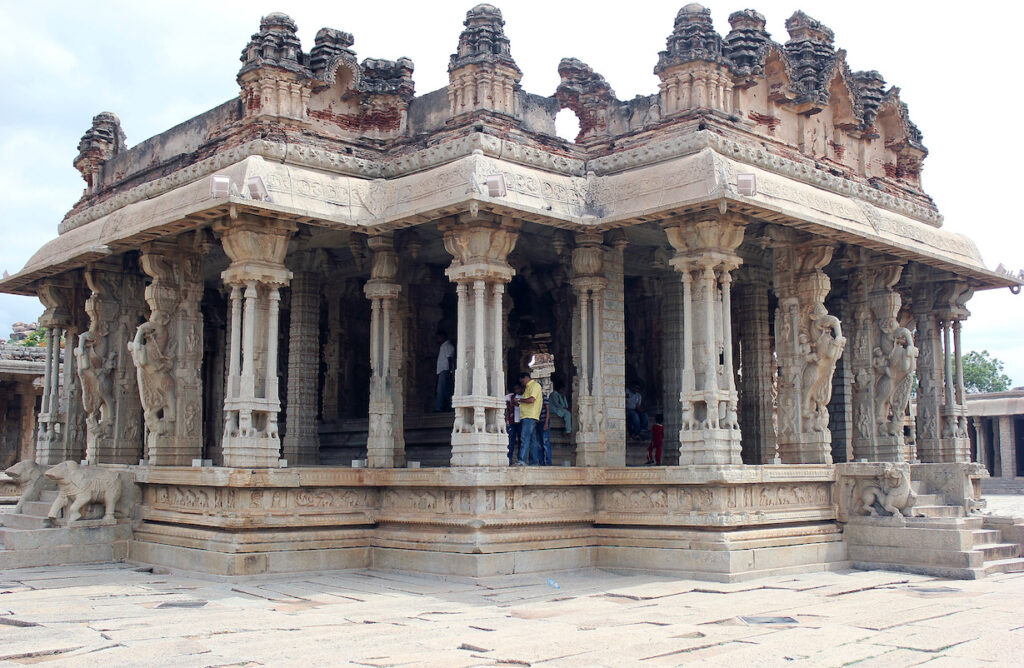
One of these advancements included the Vitthala Temple Complex. The temple has those decorative elements and influences from the Indian Ocean trade plus the Southeast Asia exchange.
Specifically looking at Imperialism as a broader concept, it helps explain how the empire is constructed. It created a sense of self in relation to the culture of others. Vijayanagara rulers were positioned as defenders of Hindu identity through the Islamic political expansion. Islamic architectures were selectively placed into the complex Hindu temples. This added a visual control of foreign influence. It turned into a political statement meaning the empire absorbs outside forms but continues to bring the importance of Hindu sovereignty. They did this by using scale and iconography. Overall this was strategic cultural appropriation reenforcing imperial authority versus passive borrowing.
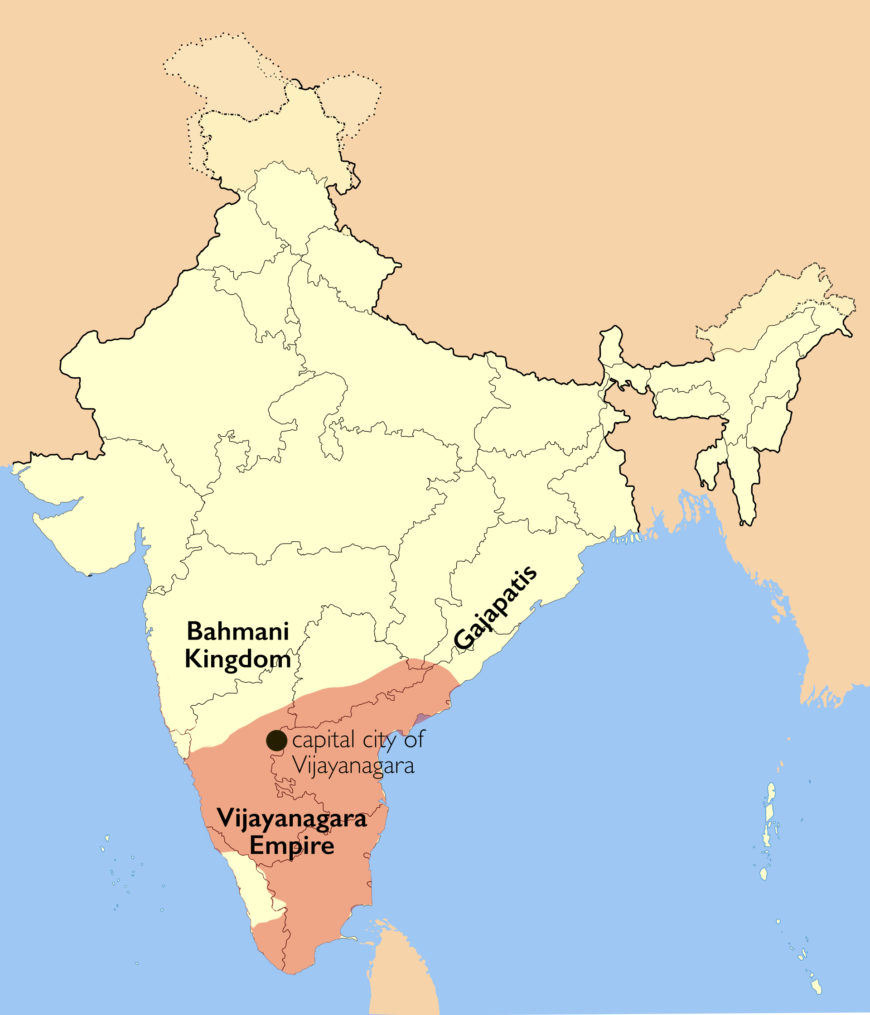
It is also important to look at the Map of the Vijayanagara Empire. Even though the routes aren’t specifically highlighted, the position is clearly strategic. They are by the Islamic sultanates and Indian Ocean trade routes.
They keep a legacy in cross-cultural exchange. It is a unique cosmopolitan Hindu architectural style that still applies in the ruins of Hampi today. The temples and palace structures revealed an empire that had no shame in blending traditions, interpretations of foreign motifs, and reshape into something of their own distinctly. Vijayanagara’s art was a cultural exchange that doesn’t dilute identity. It strengthens it by the artist using new tools to show power, spirituality, and political visions. The empires architecture became a testament to Southeast Asias history specifically artistic history. It was built on movement and transformation!
For more information on anything mentioned above, visit the link below:
Art and architecture of the Vijayanagara empire (Smart History)