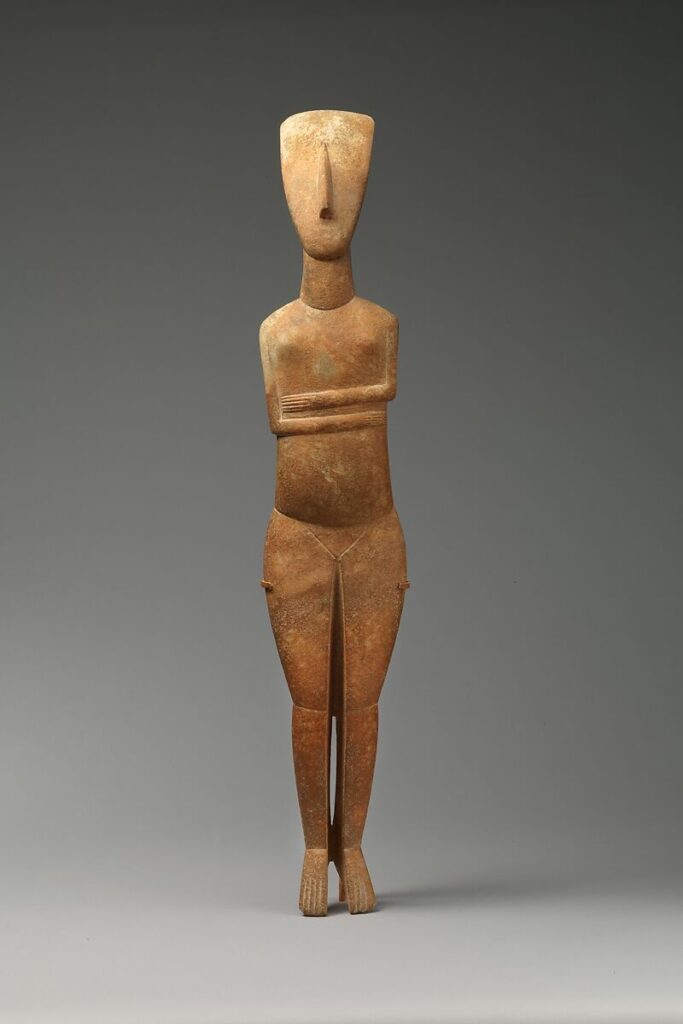
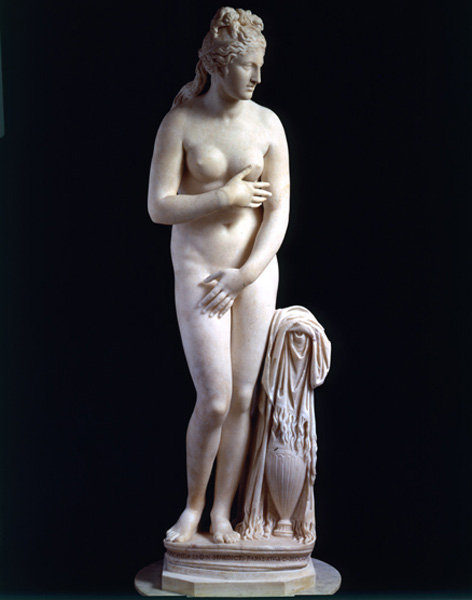
One of the most facsinating evolutions is looking at 4500 B.C.E to 190 B.C.E sculptures done during Ancient Greece, specifically the female body evolutuion.
Greece had a lot of female figures made during the Final Neolithic Period, such as the one dipicted to the right made during 4500BCE-4000BCE by the Cycladic Culture. A lot of these figures were made out of marble.
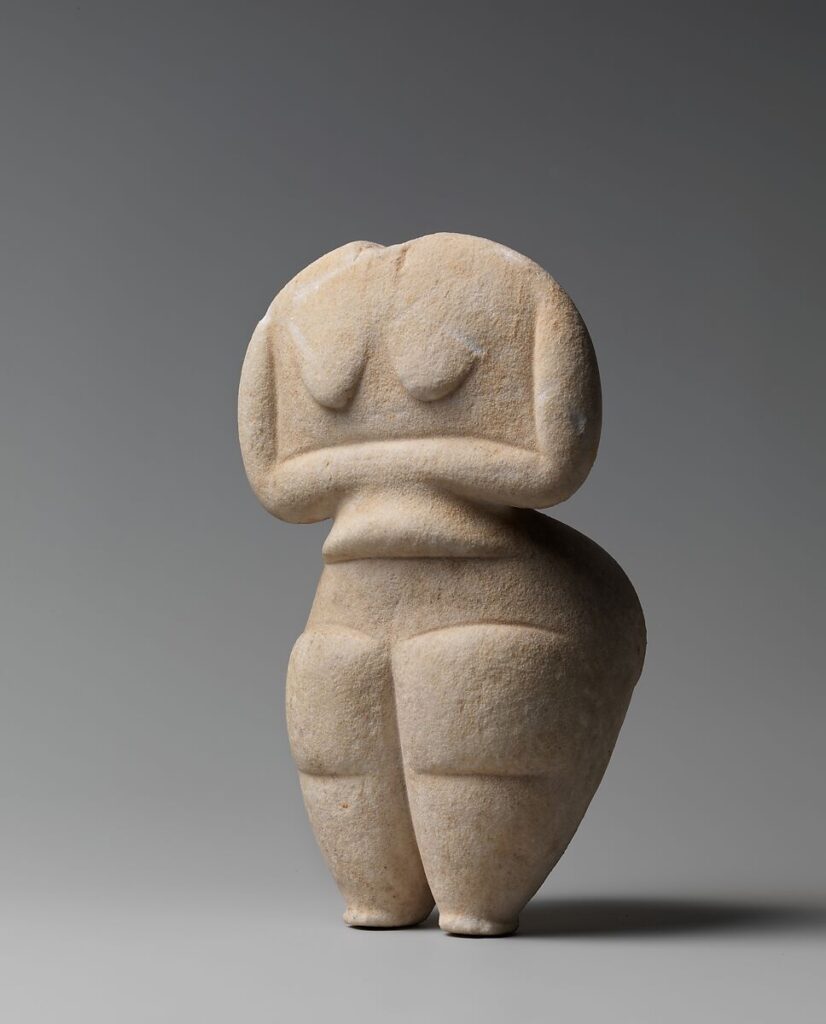
This particular marble female figure was associated with fertility and reproduction. The reason we know this is by how big her hips and legs are with her hands over the stomache. Women usually have their hands holding their stomach like that usually only when they are pregnant or insecure of themselves. But we can pretty much guarentee its fertility and reproduction because of it being a central concern in the ancient Mediterranean cultures. Also with the firgure being constructed without a face, it is pretty certain the focus is on the bigger lower body.
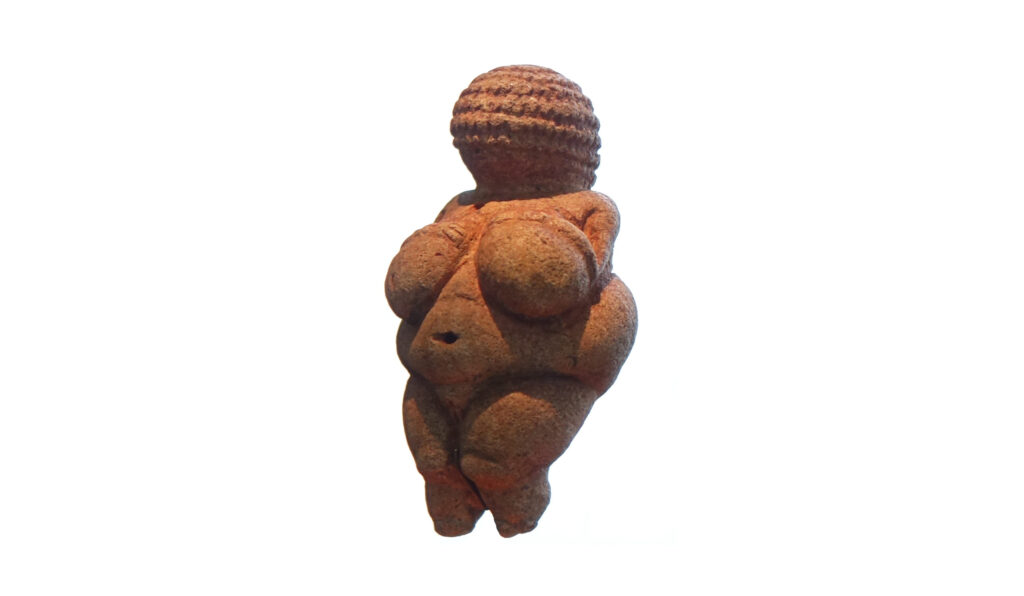
While not during the time period of Ancient Greek, similarities from the Venus of Willendorf, 24,000-22,000 BCE are present.
The Venus of Willendorf had a lot of similarities with focus being on the reproductive areas. Gives another piece of history to look on showing fertility and reproduction.
Looking back at another piece during the Early Cycladic II period between 2600-2400 BCE, the want to show fertillity and reproduction is still present throught the marble figurine. The arms are similar to the other women holding over her pregnant belly. While her form is not as focused on the size of her hips and lower body, we still are brought right to her arms with the faceless figure.
During the Final Neolithic and Early Cycladic II Period, the detail and realistic aproach is not the main focus. These pieces are made simply without a lot of naturalistic features
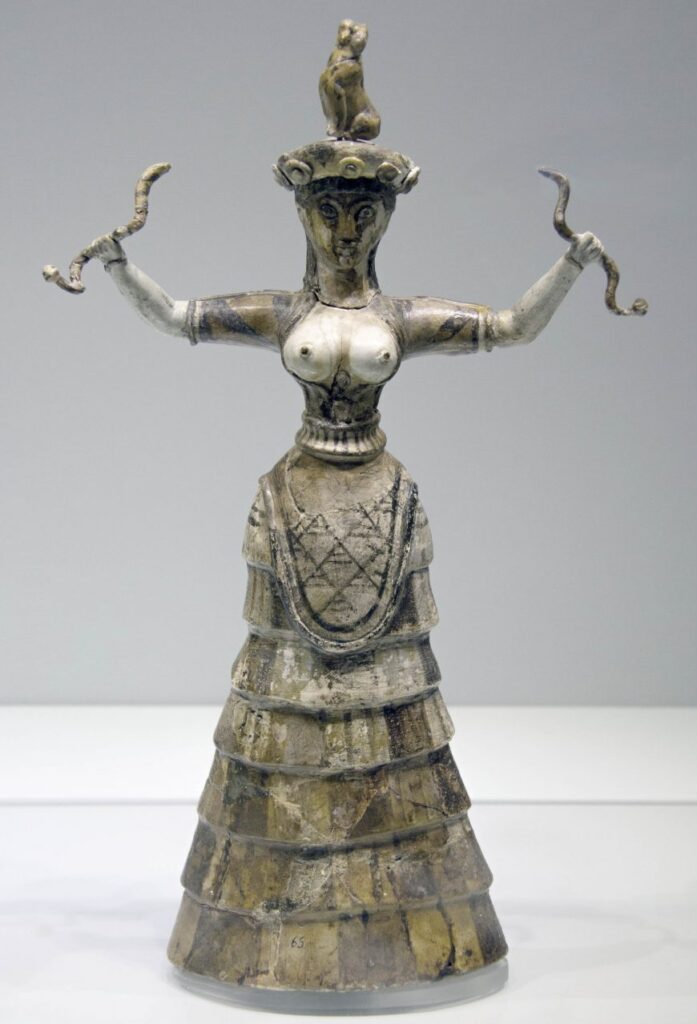
Looking into 1600 BCE, the Snake Goddess is an incredible evolution of female body representation. While part of her is restored,(head and one arm), a lot of evolution took place. The attention to detail and material make this piece feel godly.
The body is shown in a provicative way with the breast being completely shown with a lot of detail put into it. Her body is an unrealistic standard of any women with a very very slim waist. She is wearing a layered skirt which represents power in it self being a Minoan specialty. While the history behind this piece is questionable from the hat with a cat being part of her restoration, along with her being called a goddess with no particular reason to believe so, she is still a development in the representation of Greek bodies no matter what.
While being completely different from a figurine, the body of Athena Nike is beautifully sculptured in the Temple of Athena Nike, Acropolis, Athens, Greece.

The sculpted piece was made from marble representing Nike adjusting her sandal in 410BCE. The wet drapery is what makes this so incredible to look at. Conveying wet drapery along with showing that it is a body of a female is incredible improvement from all the other female bodies represented through Greece. The drapery looking wet forming around her body showing the realism of an actual human body is incredible. Compared to some of the earlier pieces made, this sculpture definitely is the most realistic and best piece to show a more realistic female body. The porportions are very well done along with getting the femine body structure compared to a males structure.
Looking at a very well know Greek sculpture, Capitoline Venus, 2nd century C.E, she was made out of Marble sculpted by Praxitiles’. The particular sculpture is the first fully nude sculpture of a female.
Unlike the other sculptures and figurines, this piece really makes the view feel like they walked in at a valnurable moment. The way the body is sculpted with her hands covering the more private parts along with a towel to the side that appears to have slipped off, the viewer definitely gets a feeling of walking in at the wrong moment. The details of this sculpture really make this a realistic human nude. From head to toe, we see the detail of every inch. The Capitoline Venus is a huge evolution of Greek art compared to the beginning pieces with a lot more detail to every skin wrinkle and small detail.
The Greeks have influenced us today to really pay attention to detail. While in the present, I feel like our culture doesn’t look at the nude of a women the same way they did back then, we still have pieces that show the woman body with detail like the drapery on Athen Nike