It is important to understand what makes Ancient Romes society ROME and Early Christian Europe society EARLY CHRISTIAN.What are these features?
ANCIENT ROME FEATURES
EARLY CHRISTIAN FEATURES
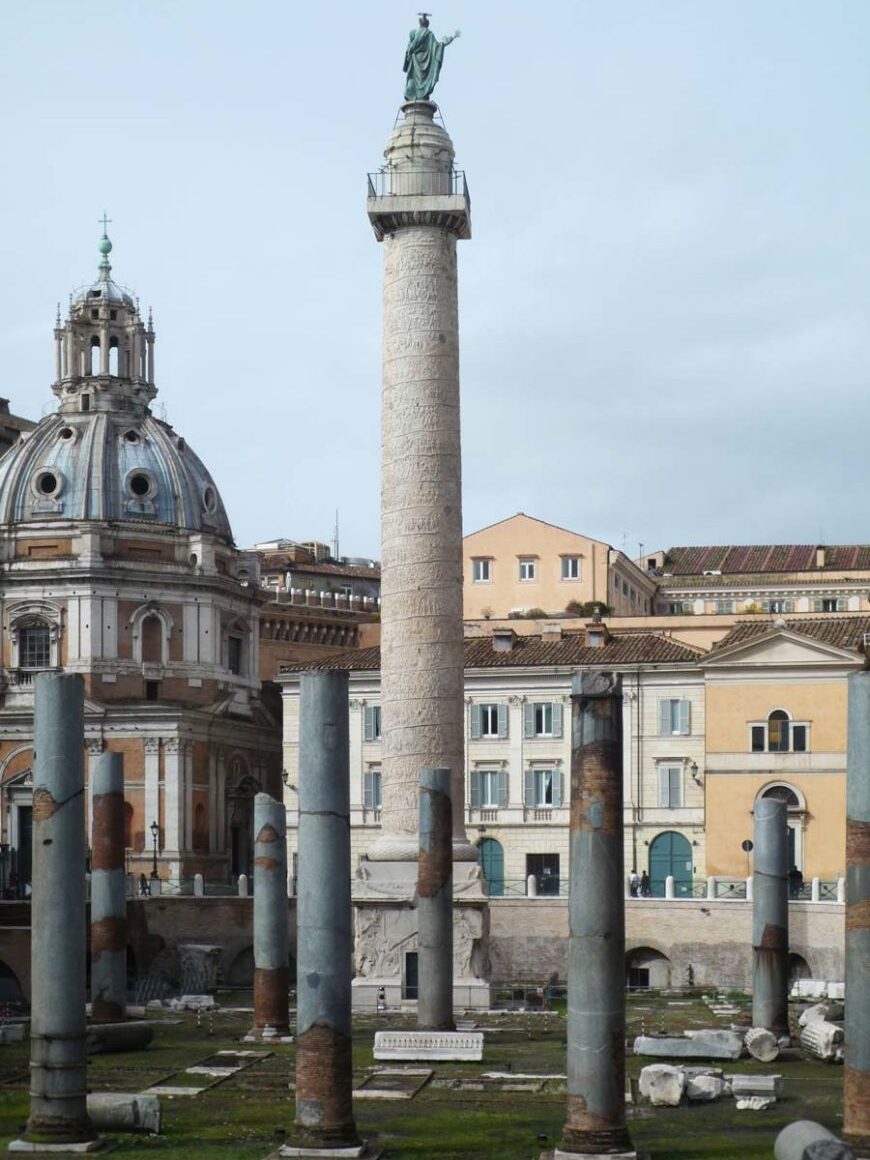
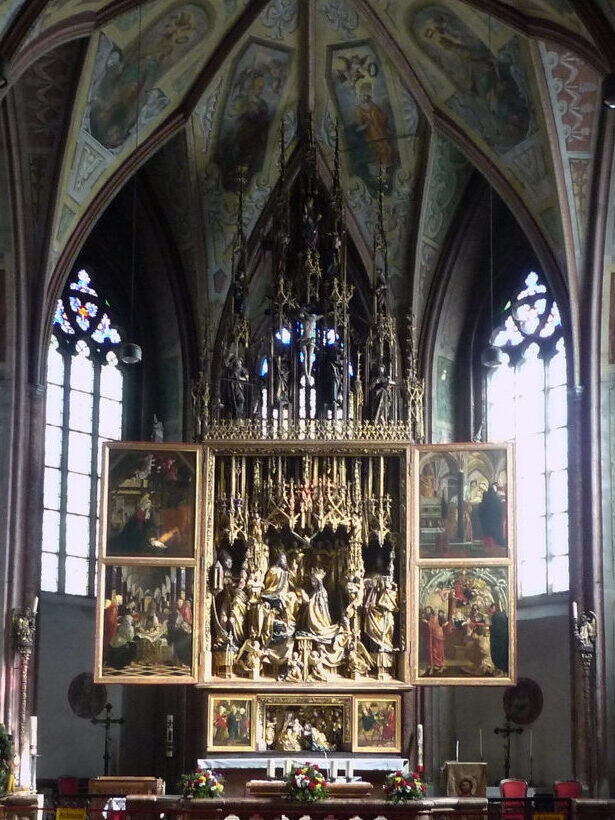
Imperial Power
Divine Authority
Engineering Innovation
Public Spectacle
Civic Pride
Spiritual Devotion
Communal Worship
Biblical Narrative
Symolism
Transformation of Roman Form
How these appeear in Ancient Rome was:
Emperors being deified with architechture reinforcing their status.
Mastery of concrete, arches, and domes enabled entirely new possibilities in architectural scale and complexity.
The art and architecture was for political and communal functions showing Rome’s dominance.
How these appear in Early Christian Europe was:
Emphasizing inner faith and the followers collective experience versus superficial richness.
Art and architecture served teaching and religious purposes, focusing on spiritual enlightenment.
Pagan architectural elements were reurposed and simplified to serve Christian devotional needs.
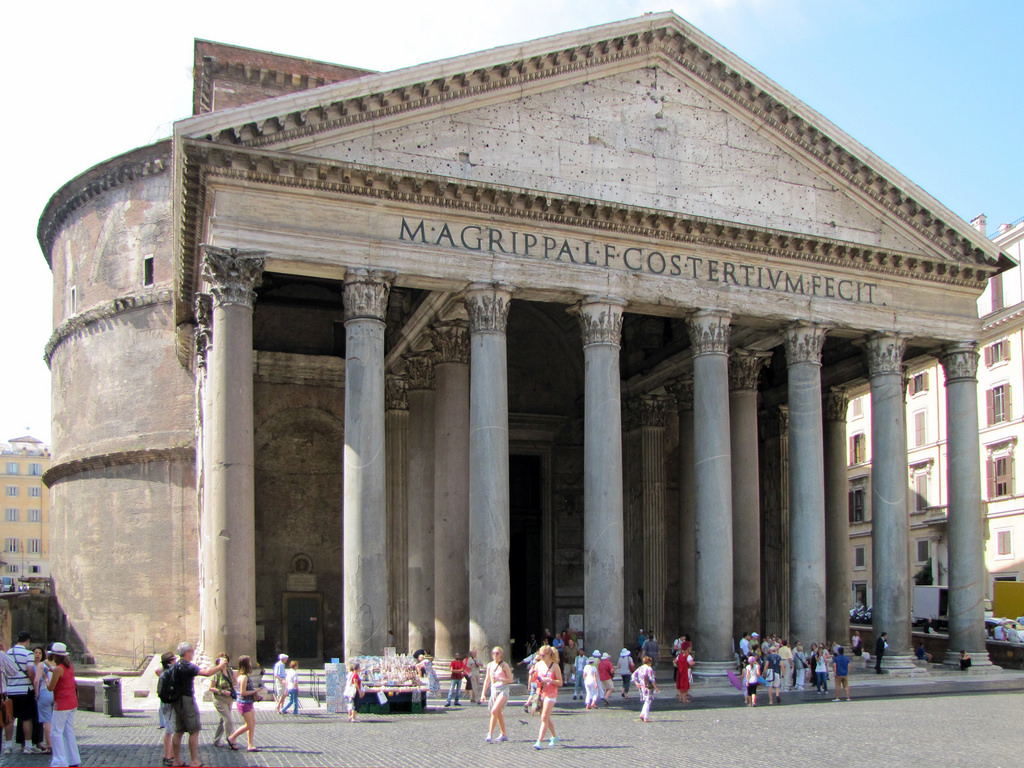
The Pantheon (c.125 CE)
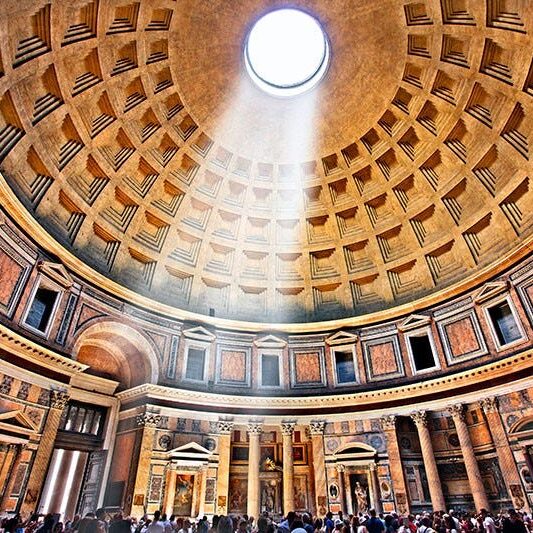
Roman engineering and religious culture blending were exemplified in the Pantheon. Its massive dome (43.3 meters in diameter) and oculus (opening) symbolize the heavens and divine order. This creates a heavenly connection within the structural components of the city. The dome’s construction uses lighter concrete mixtures and coffering demonstrating advanced material science and structural resourcefulness. The building’s harmonious proportions and use of Corinthian columns reflect classical ideals of balance, splendor, and imperial authority. The Patheon’s design integrates a perfect circle and square. This symbolized the union of heaven and earth, a concept central to Roman’s understanding of the universe. Original a temple to all gods, it later became a Christian church, illustrating Romes adaptability and continuity of a sacred space. This leads us into Early Christian Europe!
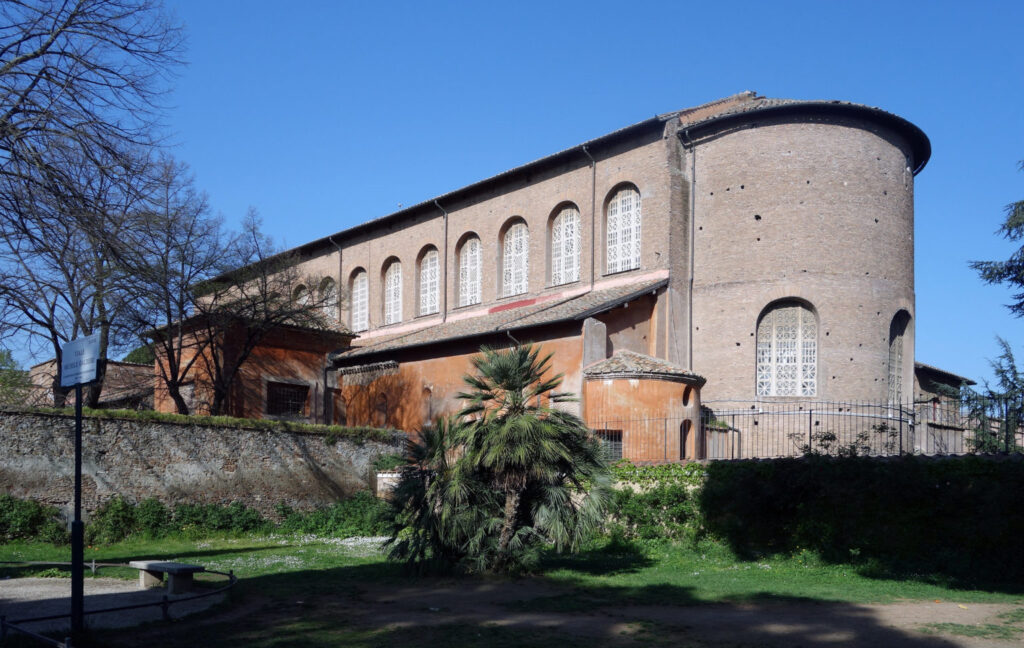
Basilica of Santa Sabina (c.422-432 CE)
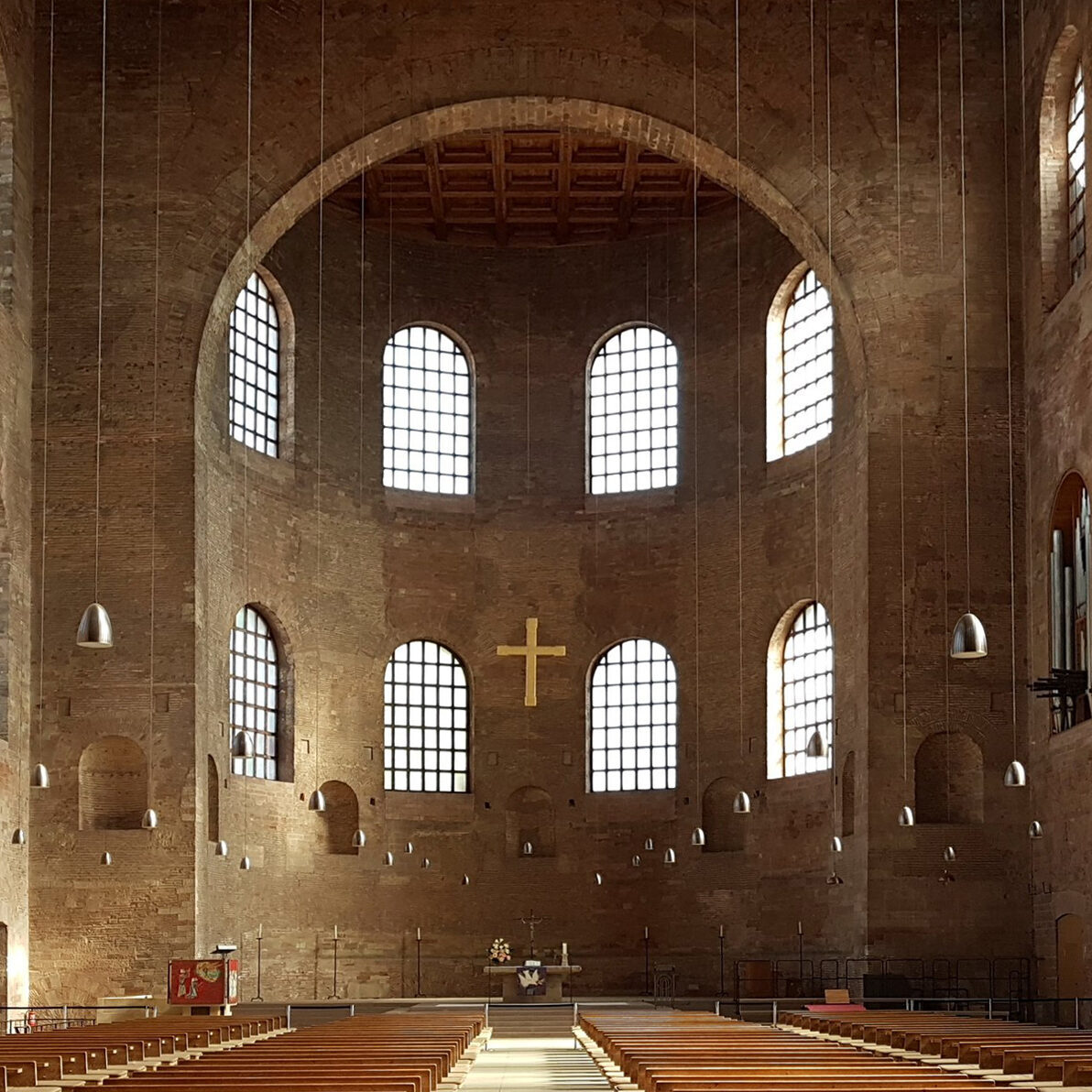
Santa Sabina is a basilica-style church that adapted Roman architecture for Christian services. Its plain brick exterior contrasts with the luminous interior, symbolizing the Christian idea of inner spiritual light and humility. The long nave directs focus toward the back and altar, emphasizing the Eucharist’central role in worship. Columns and spolia from Roman buildings were reused, linking Christian faith to imperial heritage while redefining their meaning. The large upper windows flood the interior with natural light, enhancing the spiritial atmosphere and symbolizing divine presence.
A Comparison Of Rome and Christian Europe
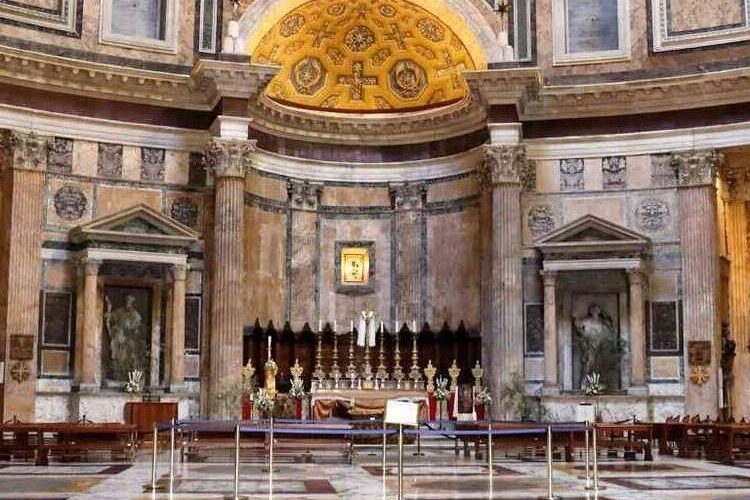
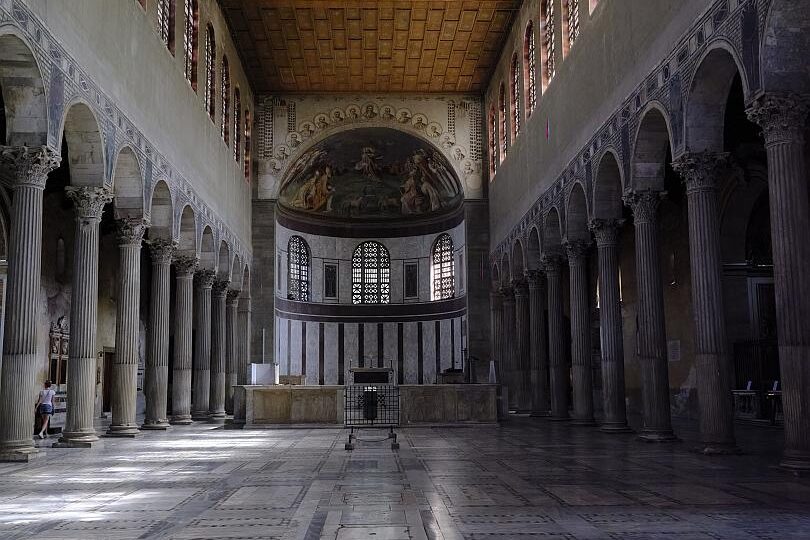
Ancient Rome
Christian Europe
Function
Temple dedicated to all Roman gods, symbolizing imperial power and religious inclusivity
Christian basilica designed for congregational worship and liturgical function
Architectural Form
Centralized plan with a massive dome and oculus, emphasizing cosmic order and imperial divinity
Longitudinal basilica plan with a nave and apse, focusing on processional movement and communal gathering
Symbolism
Represents the cosmos, divine authority of the emperor, and the unity of heaven and earth
Embodies spiritual clarity, humility, and the communal nature of Christian worship
Material and Techniques
Advanced Roman concrete, marble facing, Corinthian columns, coffering for weight reduction
Brick construction, reused Roman columns (spolia), simpler decorative scheme emphasizing function over form
Atmosphere and Experience
Monumental, awe-inspiring, designed to impress and convey power
Serene, contemplative, designed to foster spiritual reflection and community
To Summarize
Roman art and architecture, exemplified by the Pantheon, celebrated worldly power, technological mastery, and imperial ideology through monumental and innovative design. Think big, impressive, and built to last. Early Christian architecture, as seen in Santa Sabina, took different approach. It reinterpreted Roman forms to express spiritual values, communal worship, and humility. The focus shifted from grandeur to simplicity and symbolic meaning. Essentially, one style aimed to impress with earthly power, while the other sought to inspire with spiritual devotion.
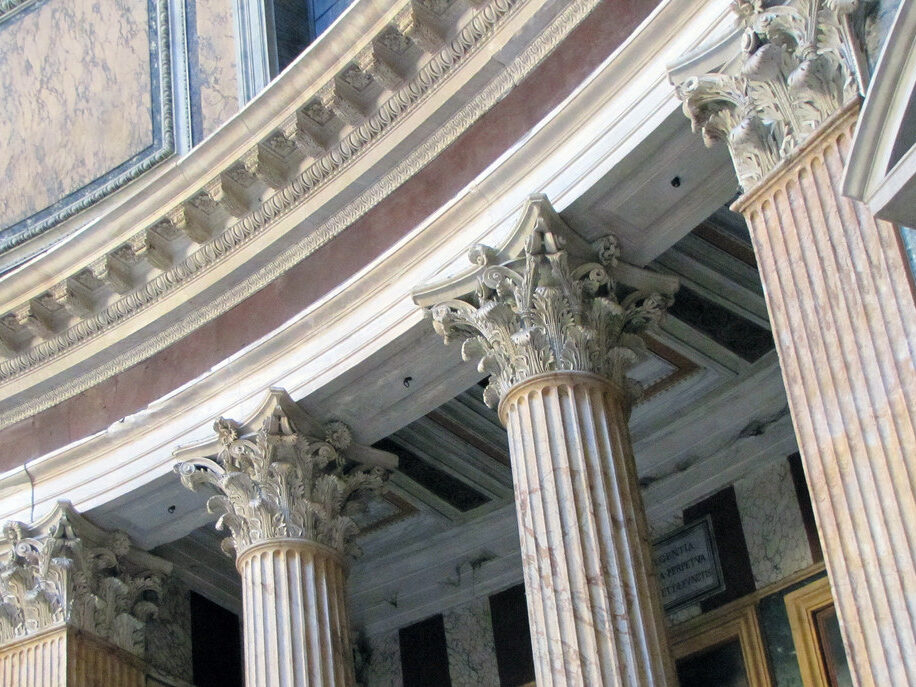
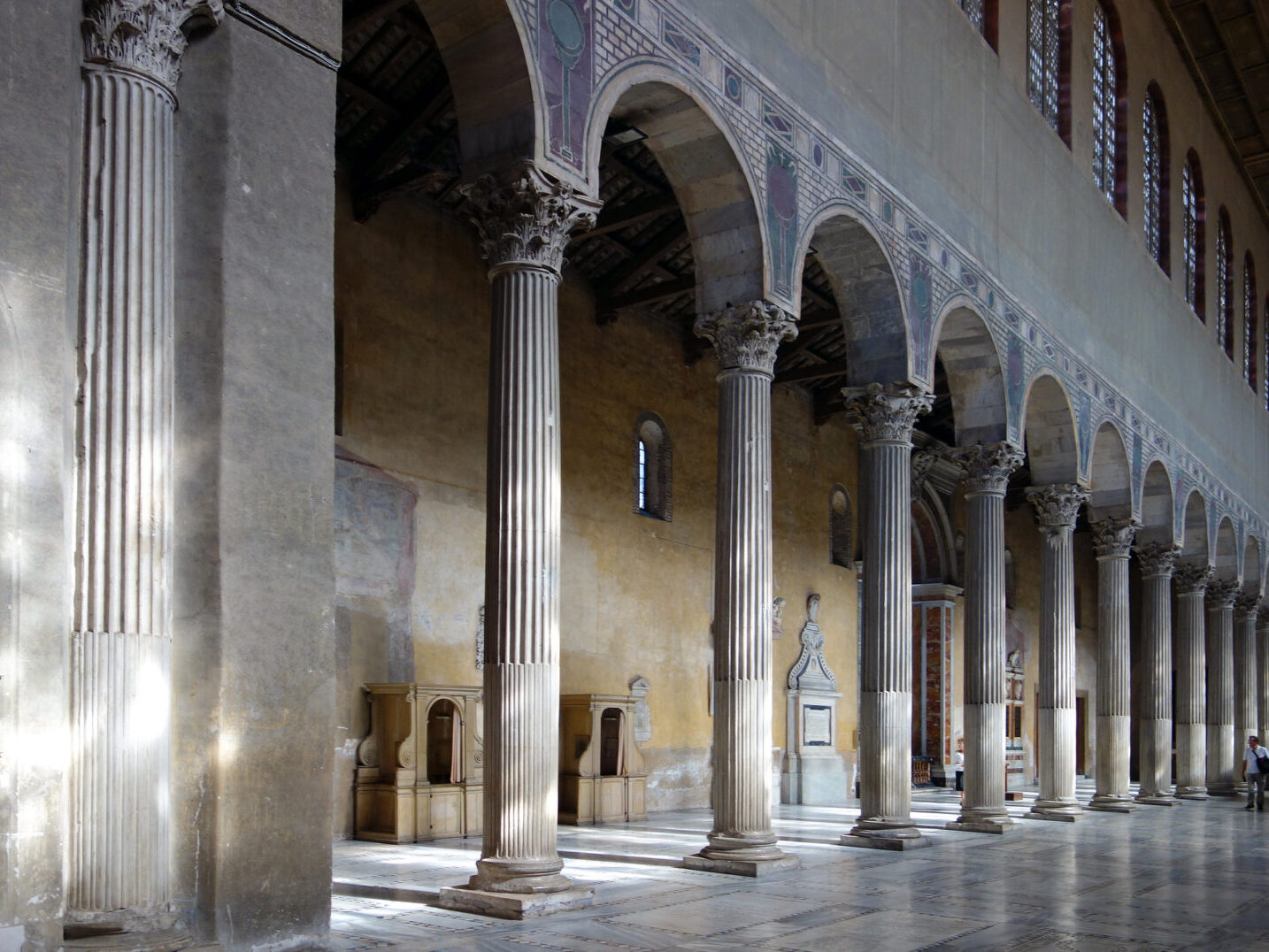
While the Pantheon and Santa Sabina reflect distinct cultural and religious values, they also share key similarities that demonstrate continuity and adaptation over time:
The use of Roman architectural elements are used in both buildings. They incorporate classical Roman features like columns, arches, and basilica forms. Santa Sabina reuses columns and spolia from earlier Roman structures.This links Christian architecture to imperial heritage.
Both had sacred functions serving as sacred spaces designed to connect worshippers with the divine, whether through the cosmic symbolism of the Pantheon’s dome or the spiritual focus of the Santa Sabina’s nave and altar.
Light has a crucial symbolic role in both buildings. The Pantheon’s oculus allows natural light to illuminate the interior dynamically, symbolizing divine presence, while Santa Sabina’s clerestory windows flood the nave with light to evoke spiritual illumination.
Both create a powerful spatial experience that guide the visitors movement and focus. The Pantheon’s centralized, awe-inspiring dome or Santa Sabina’s longitudinal nave directing attention to the altar.
Adaptation and continuity is shown in Santa Sabina’s design that adapts and transforms Roman architectural language for Christian purposes. This demonstrates cultural continuity and reinterpretation rather than complete rupture.
To sum it up, these features show how early Christian architecture both preserved and transformed Roman architectural traditions to express new religious meanings and communal values. Ancient Rome’s Pantheon and Early Christian Europe’s Santa Sabina reveal contrasting values: Rome’s emphasis on imperial grandeur and engineering mastery vs. Christianity’s focus on spiritual clarity and communal worship.
Overall, the Pantheon and Santa Sabina are very important. Each having similarities and differences that both correspond with the features of their society.