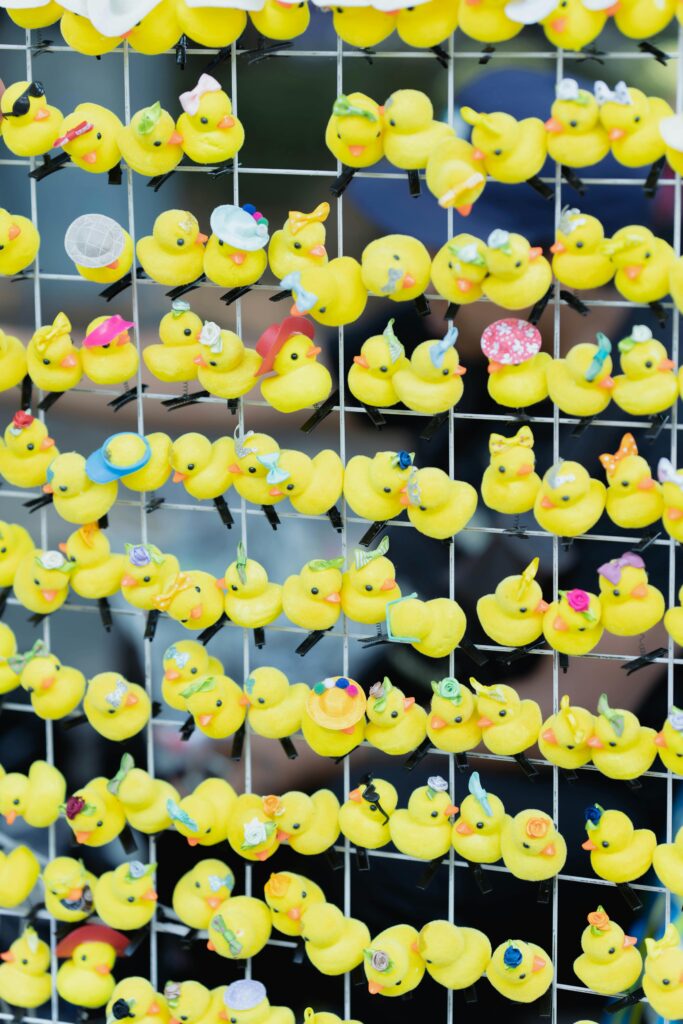
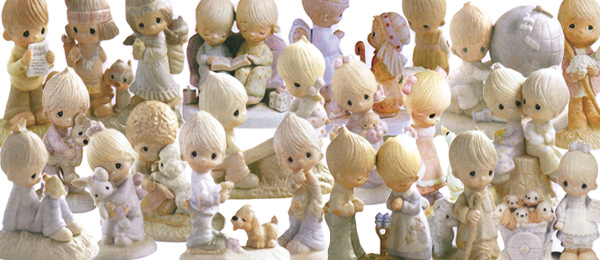
In this assignment we had to understand what a kitsch object meant. It is a German word that is similar to word trash. As we talked about it more, it means an object that is mass produced like rubber ducks, or precious moment dolls. It is typically a collectable item.
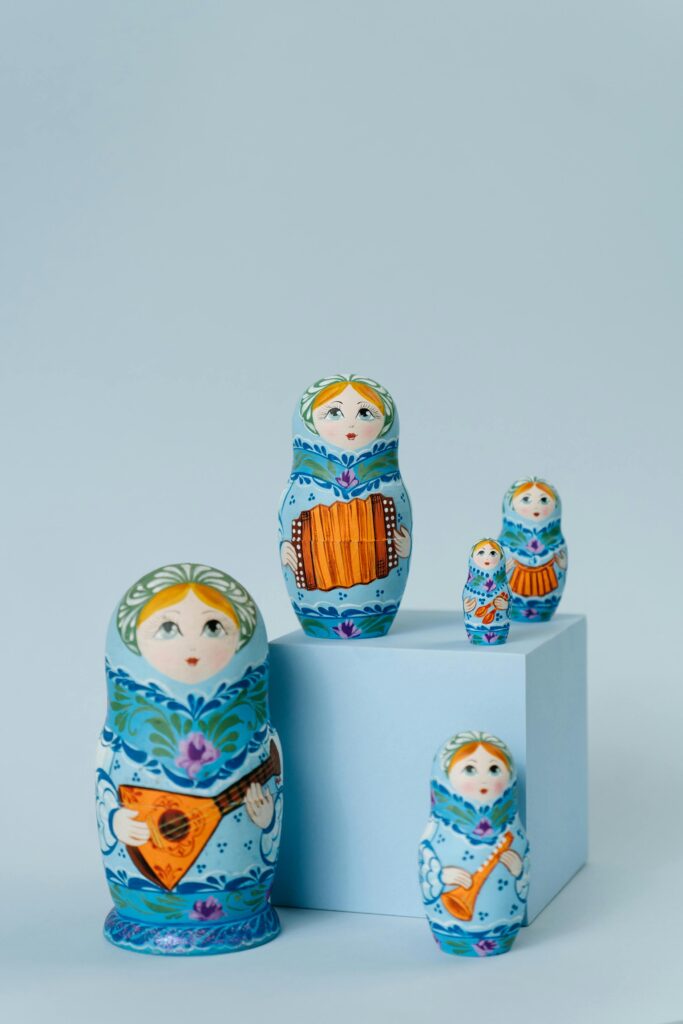
After learning what kitsch was, we had to find our own kitsch item. For me, that was a Russian Nesting doll. They are mass produced, and they are a collectable. Although we were supposed to find at least three items, the nesting doll spoke to me since it is part of my background being russian. I had my eyes set on no other kitsch item.
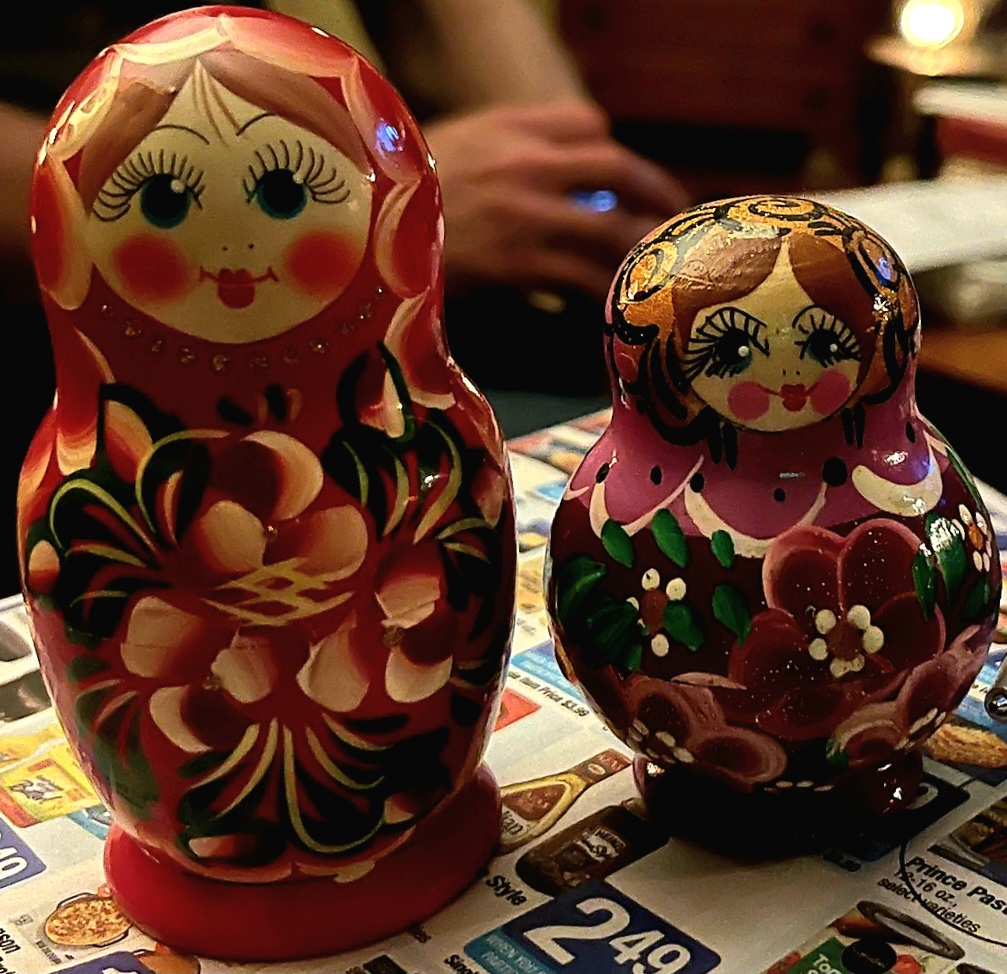
These are my personal Russian Nesting Dolls. I have two in total and I also have some blank ones to paint on my own. They typically always have flowers and leafs on them.
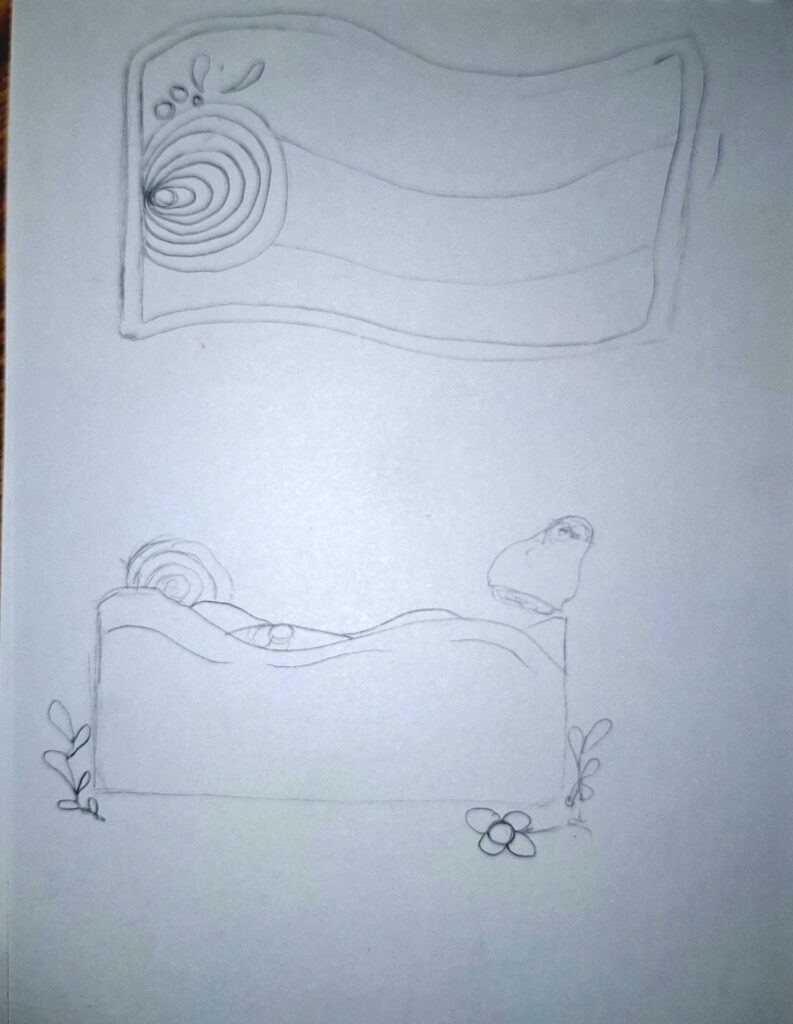
This is my initial sketch of my idea. It is in the shape of a flag and the multiple half spheres represent the inside of the doll where my physical doll will sit. The middle pieces were going to have flowers and a cityscape representing Moscow. I was thinking of having the main vessel sit on the vines of the flowers.
Below is the natural clay body before it gets fired and painted with my design. It is different from the sketch but close to the same. It has the same meaning to it and it will have more with paint.
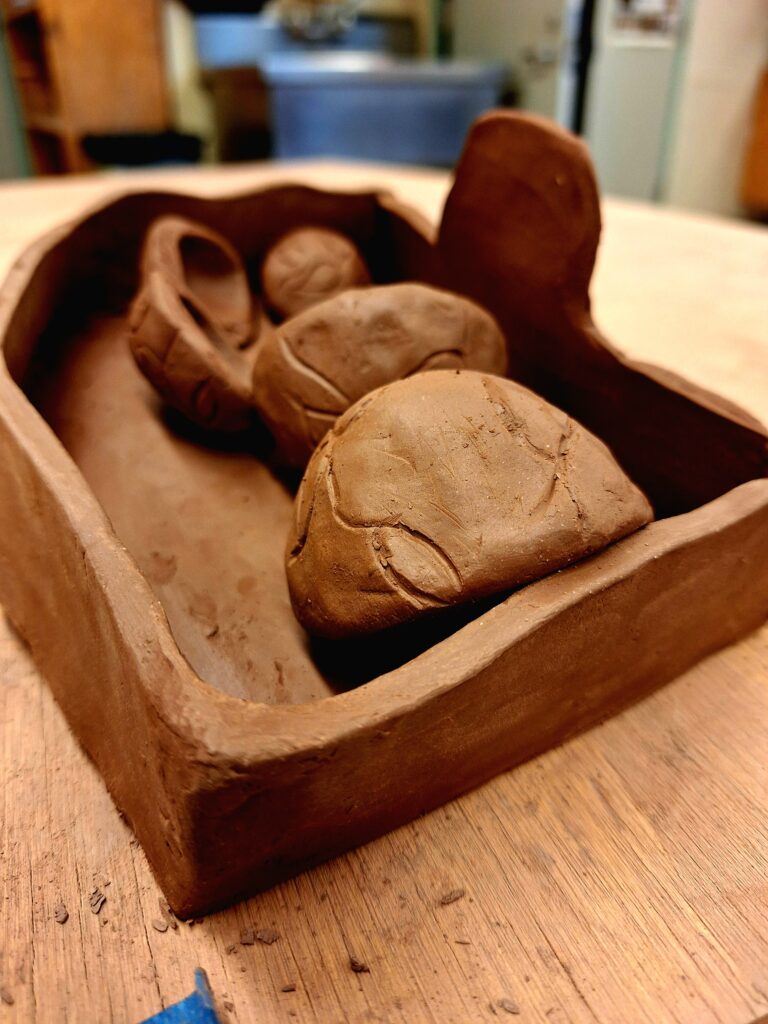
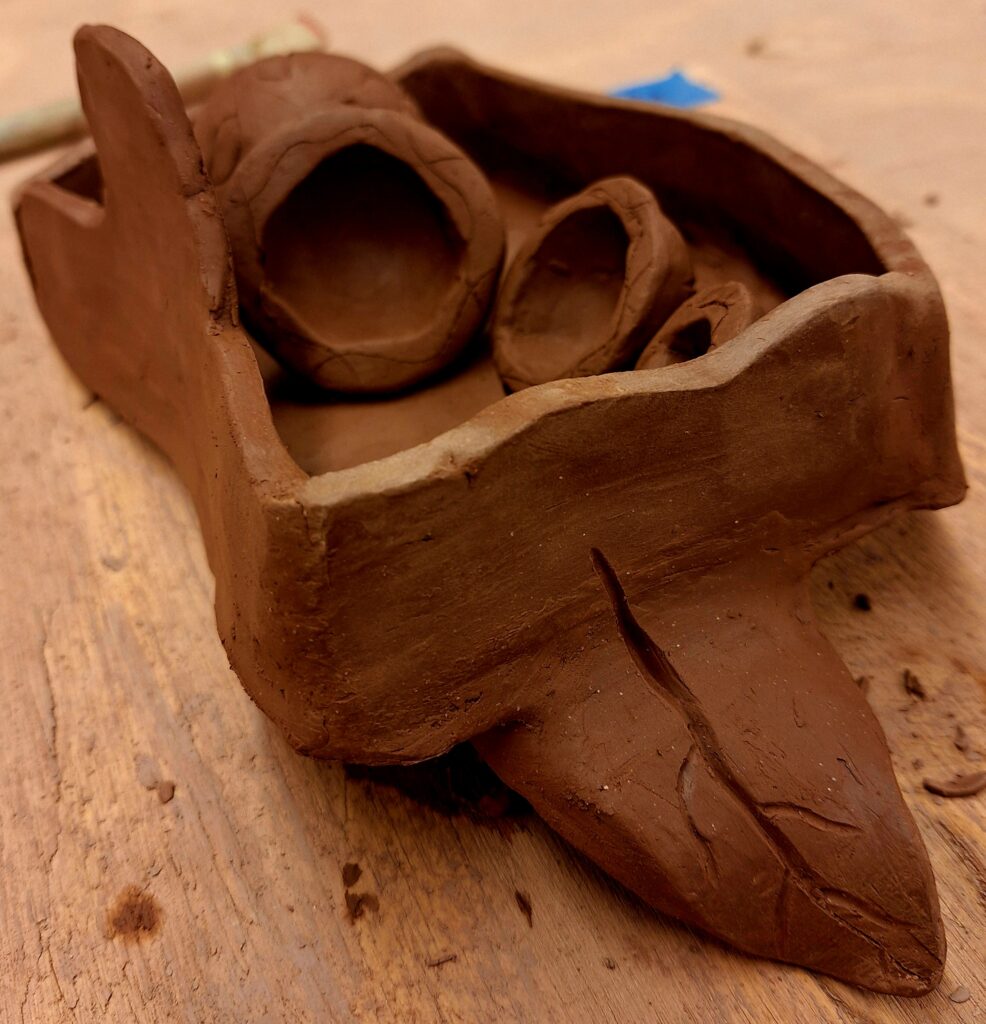
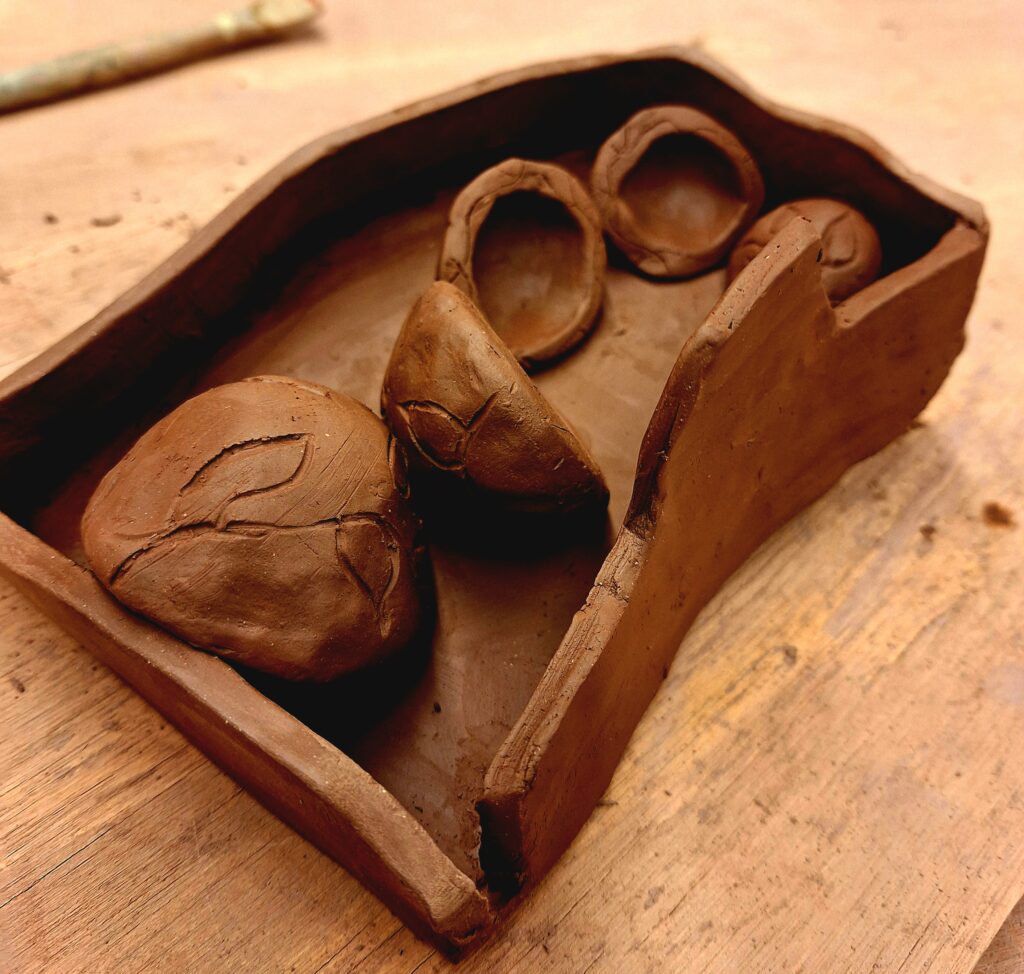
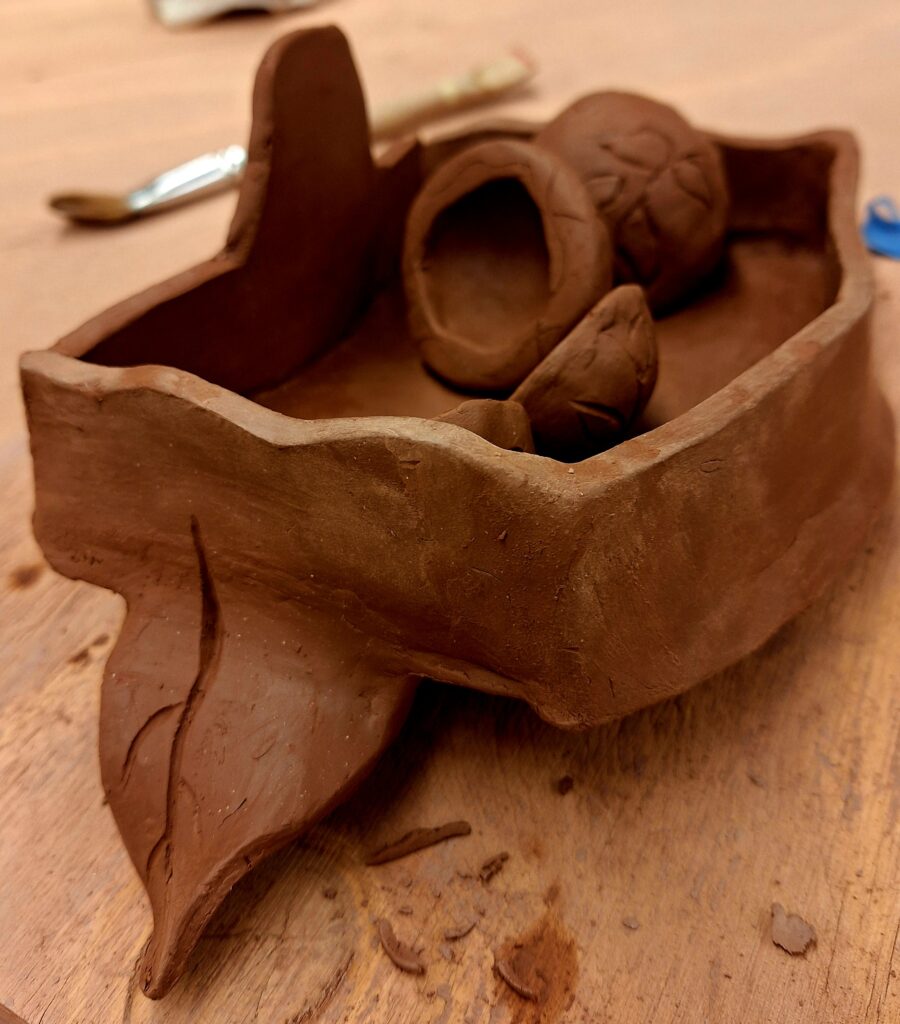
The un-fired clay is dynamic already being lifted up by the leaf. It makes it so it doesn’t sit straight and is asymmetrical. It also has repetition with the bottom halves of the Russian Nesting Dolls. The bottoms vary in size with patterns on them. The sides of the vessel also are uneven. It is supposed to represent mountains and the cityscape of Moscow. Everything represents something!
Up next is the fired piece that hopefully stays together!!
Artist Statement: In this piece, I explore themes of heritage and cultural identity rooted in my Russian background, using the iconic nesting doll as a central motif and kitsch object. The scale and proportion of the artwork mimic the stacking nature of the Matryoshka doll, with repeated patterns on concentric half-circles creating a sense of visual rhythm and texture. The form is dominated by the shape of a flag, painted in the colors of the Russian flag, serving as a focal point that emphasizes national identity. The proximity of the Moscow cityscape, featuring Saint Basil’s Cathedral, reinforces this connection to my birthplace, which is inscribed in Russian on the back, adding a personal gesture to the material representation of cultural memory.