Taking a deep dive in to the Italian High Renaissance, we know they pursued a liking for perfect harmony, balance, and naturalism with the classical ideals. The period is described as “clarity, stability, and ideal beauty”, where they believed that nature could be perfected through reason and careful study. Leonardo, Raphael, and Michelangelo created idealized anatomy with calm expressions and balanced compositions by mathematical measures reflecting the confidence they had.
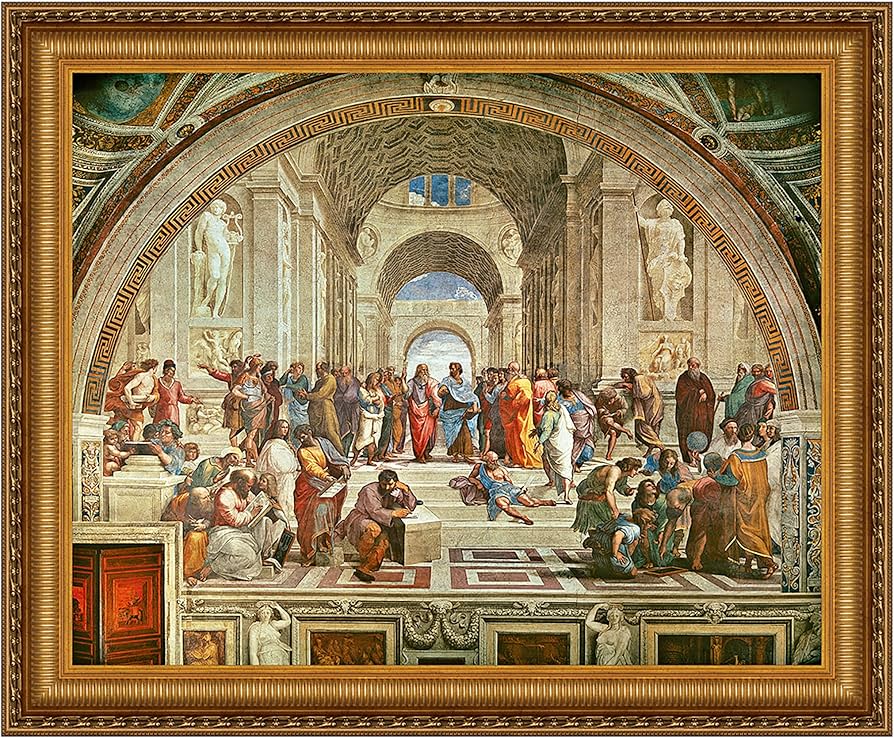
The School of Athens painted by Raphael’s embodies the ideal of architecture is symmetrical, space makes sense, and the humans interact naturally in the believable world.
The style present shows a stable and optimism of the 16th century. Humanism and classical ideals shaped the artistic goals of the High Renaissance.
Mannerism cracks the perfection of the Italian High Renissance. Mannerism was a departure from the perfection embracing distortion, elegance, and emotional tension giving way to harmony and clarity. The Mannerist painters “privilege artifice over naturalism”, creating elongated bodies, twisted poses, and ambiguous space.
The Deposition from the Cross shows the shift clearly with the floating bodies no sense of gravity. It also feels strangely empty in the center with the colors being unnatural and acidic. They “shattered the confidence of the High Renaissance.”

They valued complexity leading them to create pieces that were intentionally challenging, not naturalistic.

Madonna of the Long Neck by Parmigianino is a very clear example of Mannerism differing from the High Renaissance ideals. The paintings proportions are explained as “exaggerated to the point of elegance,” with Christ’s body being elongated and the impossibly long neck. It creates a sense of refined artificiality.
Some other oddities are the small prophet and the oversized column that leads no where.. Compositionally it doesn’t feel balance with the figures crowded on one side. It has a stylized beauty feel to it. The Mannerist artist were “less concerned with naturalism than showcasing their own virtuosity,” with the painting taking in the shift. A look away from nature, Parmigianino creates a piece that is experimental and an elite curiousity of a world with no stablity or order.